
The Principles of Interior Design.
At the heart of a good design is the creation of spaces that feel good to be in and this may vary from person to person. What feels comfortable and inspiring to someone may differ from another. However, thoughtful application of the main principles of design through our design choices plays a significant role in creating cohesive and intentional spaces. A space can be completely transformed and go from feeling disconnected to seamless when applying these principles alongside personal choices of elements and materials.
This post will outline and easy overview of the five key principles of interior design that are heavily relied on by professional interior designers and be easily applied by anyone.
Balance:
Balance refers to the visual weight and distribution of elements throughout the room and ensures that one element doesn’t overpower another. A well-balanced room feels intentional, each element having a clear place and purpose. It is achieved through considered arrangement of elements such as colours, textures, patterns, lines shape and space, including use of positive and negative space and the scale of elements in a room. There are three main types of balance used in interior design: symmetrical, asymmetrical and radial balance.
Symmetrical balance is the visual weight of elements evenly distributed on either side of a room. It is one of the easiest ways to achieve balance. Common examples include matching bedside tables placed on either side of a bed or two identical armchairs positioned opposite one another and a sitting room.
Asymmetrical balance is achieved through placement of different elements in a room but still feel visually equal in weight. For example, a large sofa to one side of a room can be balanced with several smaller furniture pieces or décor items on the other side. Additional similar colours, patterns and textures amongst this arrangement also helps the room feel balanced.
Radial balance occurs when elements are arranged around a central focal point in the room. For example, a large ceiling chandelier is placed centrally followed by a round dining table and chairs placement centrally beneath it. This kind of balance draws attention inwards and creates a focal point.
This kitchen design demonstrates central balance through placement of the large ceiling light fixture directly above the kitchen island, creating a strong focal point. Asymmetrical balance is also achieved through use of tall cabinetry to one side of the island, balanced with lower cabinetry and kitchen appliances on the opposite side.
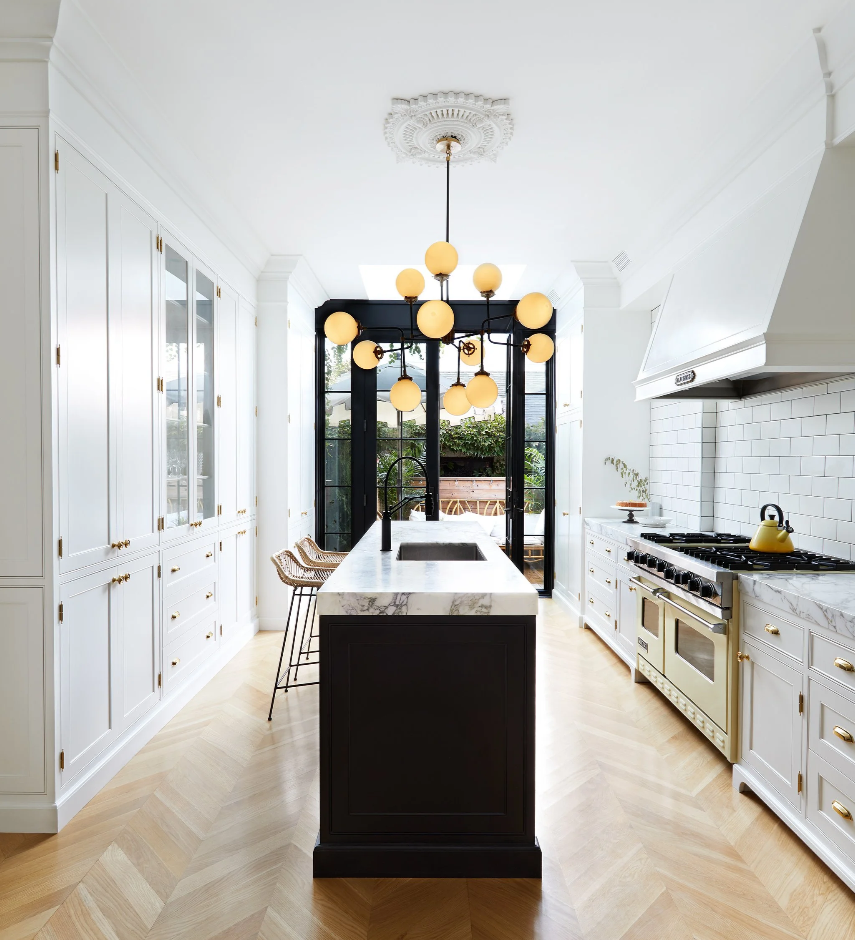
Image source: alisonmilne.com
Image Author: Alison Milne Co.
Harmony:
Harmony is the design principle that ensures all elements in the room feel connected and cohesive. This can be achieved through repetition of elements with similar characteristics of colours, patterns, textures or shapes. A room that achieves harmony feels comfortable and unified and the more consistently elements are repeated, the more harmonious it becomes.
This living room achieves harmony through consistent use of timber materials, warm-toned colour palettes and repetition of geometric linear pattern in the upholstered chairs.
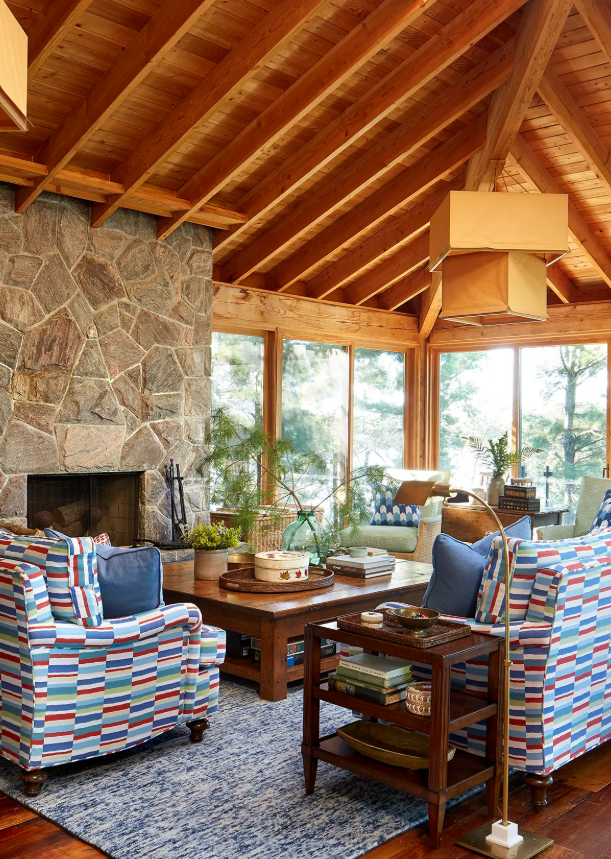
Image source: cynthiafergusondesigns.com
Image Author: Cynthia Ferguson.
Proportion and Scale:
Proportion refers to how objects relate to each other and scale is how they relate to the size of the room itself. A well scaled room creates visual calmness and rest. If the scale and proportions of a room are off, the space can feel awkward, uneasy and ultimately either too empty or too cramped. This is seen through furniture that is too small in a large room or oversized furniture in a small room. Artwork is another common example that if incorrectly scaled to the wall or room’s size, can disrupted the balance of a room.
This living room effectively demonstrates good use of proportion and scale with a generously sized sofa that the suits the large scale of the room. Its low-profile design ensures that the overall design of the room still feels open and spacious.
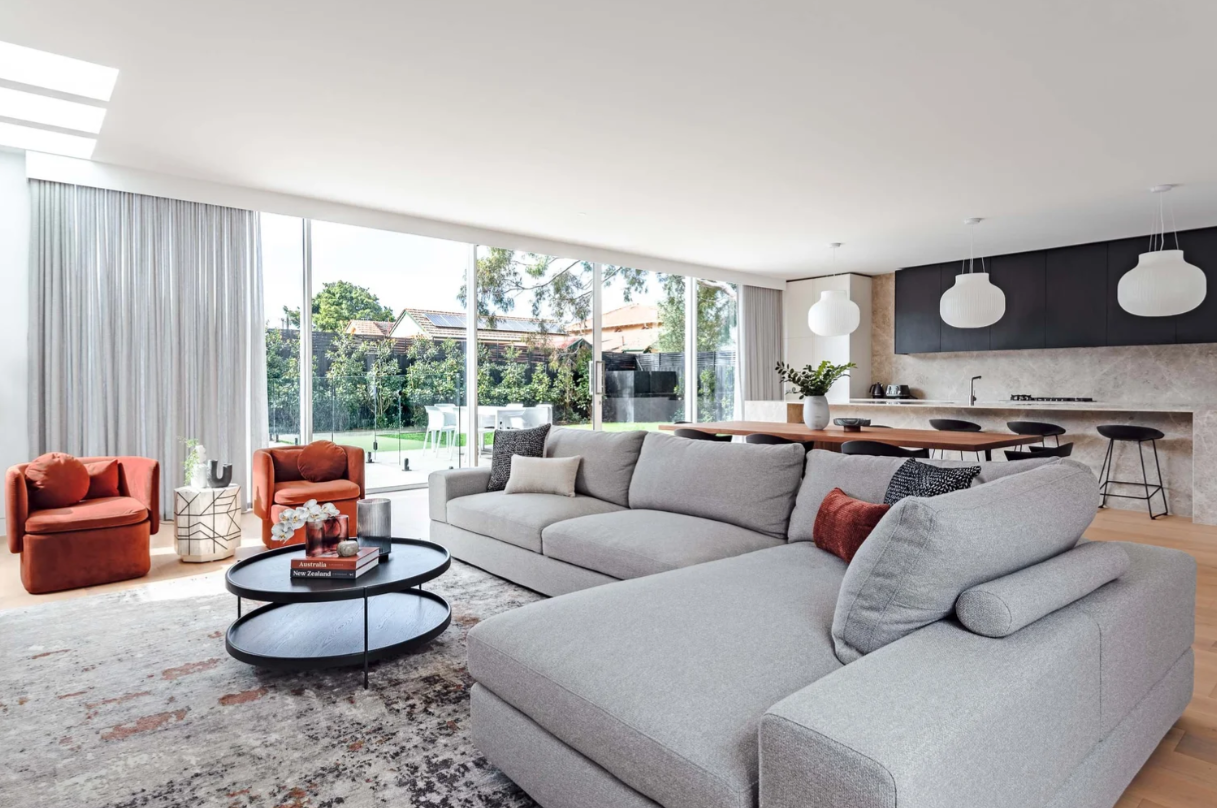
Image source: atmospheredesigns.com.au
Image Author: Atmosphere Designs
Rhythm:
Rhythm is the principle of design that creates movement and flow throughout a room and guides the eye from one element to another. It can be achieved through repetition, alternation or progression of colours, lines, shapes and patterns. When applied effectively, rhythm makes elements feel predictable, expected and cohesive, creating visual continuity throughout the room.
In this kitchen, repetitive rhythm is evident in the geometric linear pattern of the timber ceiling and wall beams as well as the repeated placement of barstools and rectilinear shapes in the door mullions.
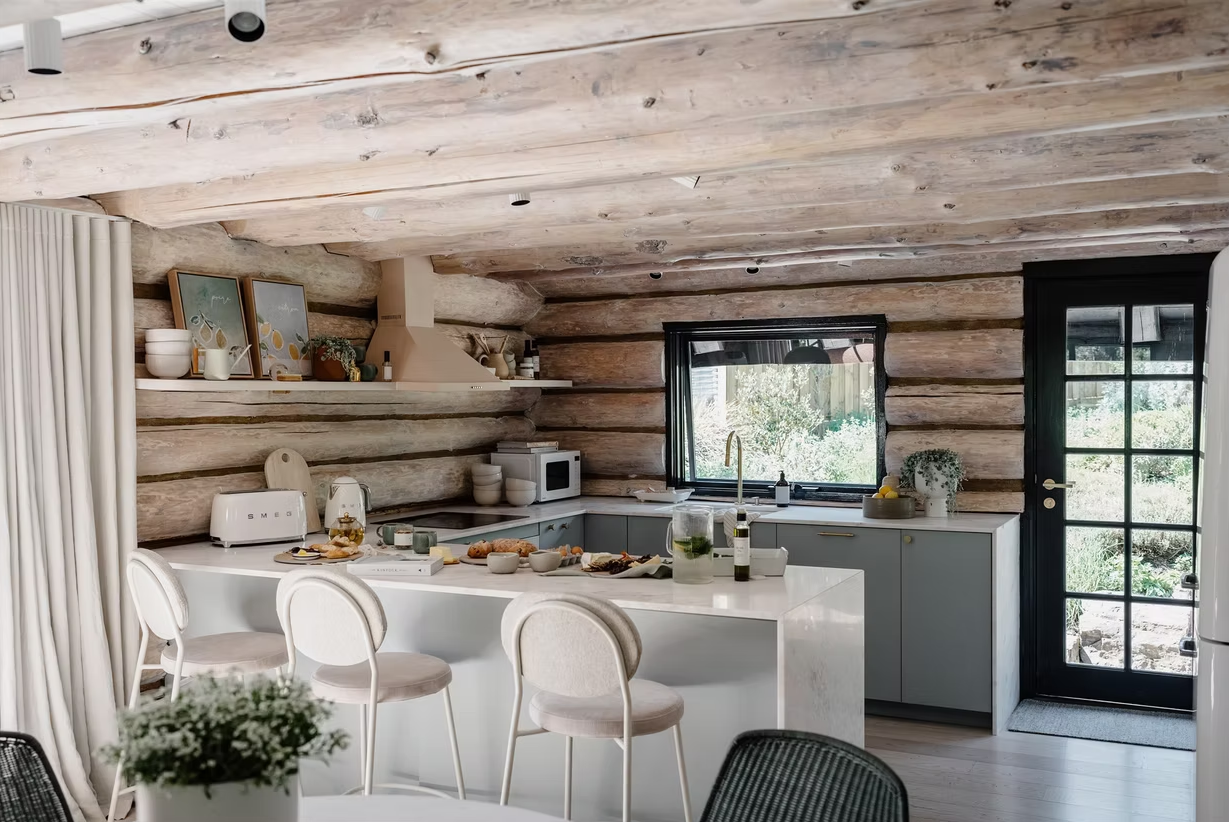
Image Source: norsucabin.com.au
Image Owner: Norsu Design
Emphasis:
Emphasis refers to creating a room’s focal point and the element/s that immediately draw attention. It is typically the most dominant, visually distinctive or contrasting feature in the room. It is achieved through contrast in colour, shape, pattern and scale. A room with no focal point can feel directionless, lack visual interest or can result in too many elements in the room competing, making it feel untidy or cramped. Commonly seen focal points in a room include a large statement artwork piece, a fireplace, a large ceiling light fixture or a feature wall or window.
In this room, a centrally placed piano acts as the focal point in the room due to its placement, dominant scale and contrasting dark colour and glossy texture compared to the surrounding neutral tones, natural elements and negative space to give it strong visual emphasis.
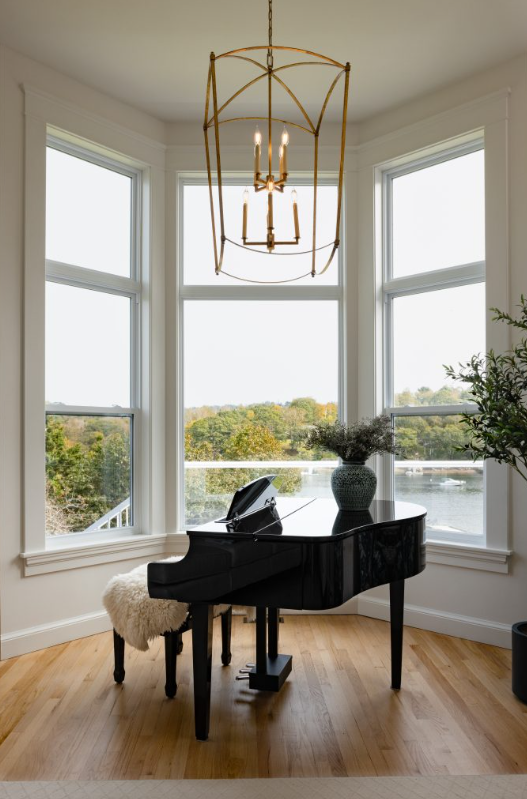
Image Source: Stiljames.ca
Image owner: Stil James Residential Design Studio
The principles of interior design provide a framework for creating spaces that feel intentional and cohesive. Whilst there are no strict rules when it comes to designing a space that feels good to be in, considering balance, harmony, proportion and scale, rhythm and emphasis can act as a foolproof and easy guide to creating comfortable, functional and visually appealing spaces, regardless of personal design style.